
TL;DR: Ontario's freeze-thaw cycle and heavy road salt use create ideal conditions for aggressive rust and corrosion—especially on the undercarriage, brake lines, and frame. Regular underbody washing, professional rustproofing, and spring inspections are the most cost-effective ways to extend the life of your vehicle. The Auto Station in Burlington can assess your vehicle's corrosion risk and recommend the right protection plan.
If you drive anywhere in the Golden Horseshoe between November and April, your vehicle is under constant chemical attack. Ontario municipalities spread millions of tonnes of sodium chloride on roads each winter to keep drivers safe—but that same salt is quietly eating away at your car's metal components from the inside out.
Burlington and the surrounding Halton Region are no exception. The City of Burlington salts primary and secondary roads at the start of every snowfall event, and the Region of Halton uses a combination of rock salt, pre-wetted salt, and brine solutions throughout the season. For your daily commute along the QEW, this means months of steady exposure to one of the most corrosive environments in Canada.
In this article, we'll break down exactly how road salt damages your vehicle, what to watch for during the critical March freeze-thaw window, and the steps you can take right now to protect your investment.
Why Is Ontario So Hard on Vehicles?
What makes road salt corrosive?
Short answer: Salt accelerates rust by lowering water's freezing point, keeping metal surfaces wet longer, and acting as a catalyst for oxidation.
Road salt (sodium chloride) does three things when it reaches your vehicle:
- Attracts moisture. Salt is hygroscopic, meaning it draws water out of the air and holds it against metal surfaces—even when temperatures are below zero.
- Keeps surfaces wet longer. By lowering water's freezing point, salt creates a liquid film on your undercarriage in conditions where plain water would freeze and stop reacting with the metal.
- Speeds up oxidation. When dissolved in water, salt separates into sodium and chloride ions that supercharge the electrochemical reaction we call rust.
The result? What might take years of normal wear in a dry climate can happen in a single Ontario winter.
Why does the freeze-thaw cycle make it worse?
Short answer: Daily temperature swings above and below 0°C cause water to expand and contract in cracks, pushing salt deeper into hidden crevices.
March is the peak of freeze-thaw season in the Golden Horseshoe. Daytime temperatures climb above freezing, melting road slush into a salty liquid that seeps into seams, joints, and chip marks on your vehicle. At night, temperatures drop and that water refreezes, expanding inside crevices and widening the paths for future moisture. This daily expansion-contraction cycle cracks protective coatings and pushes corrosive saltwater deeper into places you can't see.
Ontario and Quebec are widely considered the highest-corrosion-risk provinces in Canada because of this combination: heavy salt use, frequent freeze-thaw cycles, and high humidity from the Great Lakes. Ontario alone can use 3–5 million tonnes of road salt per winter, making corrosion one of the leading reasons vehicles fail safety inspections in the province.
What Parts of Your Vehicle Are Most at Risk?
Short answer: Anything metal that sits beneath or behind your vehicle—especially the undercarriage, brake lines, and frame rails.
While modern vehicles are built with galvanized panels and factory coatings, Ontario winters test those defences year after year. Here are the components most vulnerable to salt corrosion:
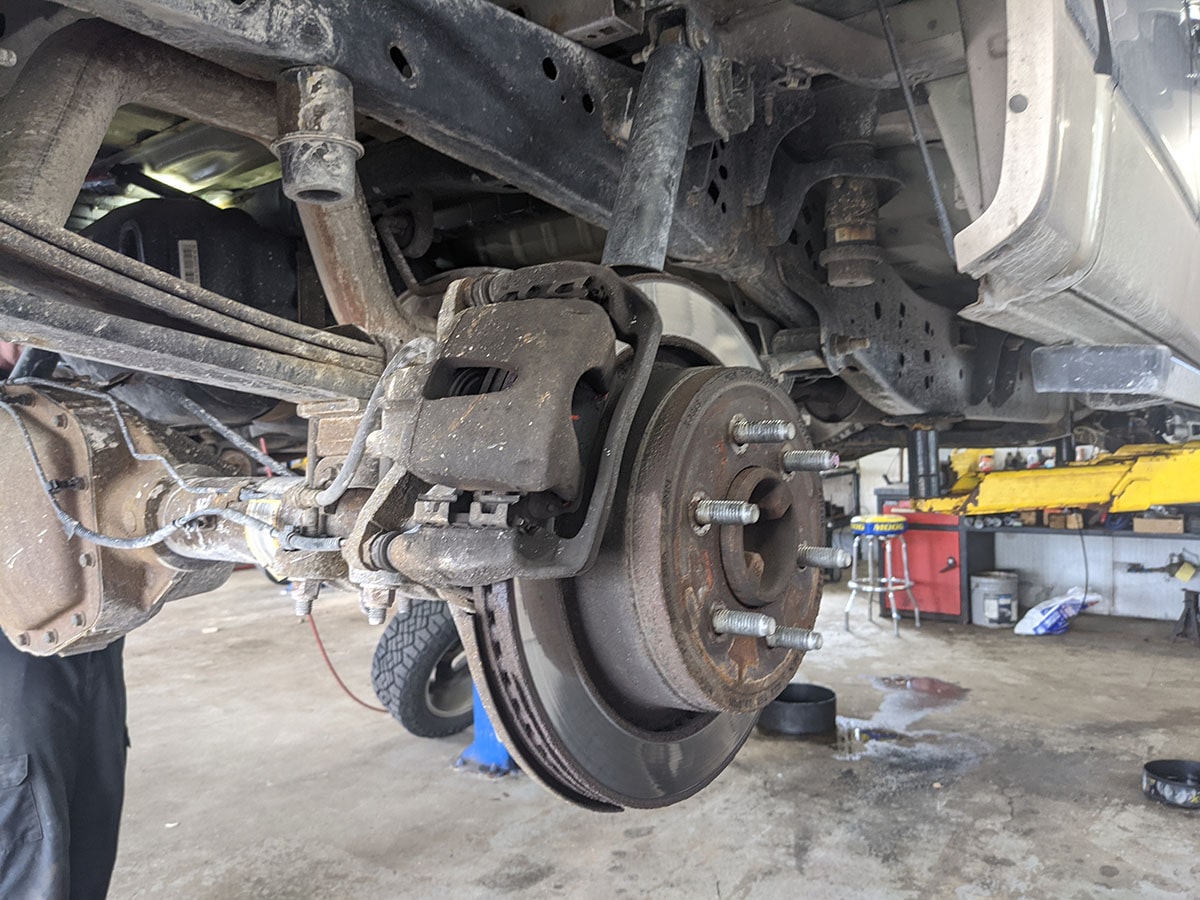
- Undercarriage and frame rails – The single largest area of exposed metal on your vehicle, and the first point of contact with road spray. Salty slush packs into every crevice and stays there for weeks.
- Brake lines and fuel lines – Thin metal tubing that corrodes from the outside in. A rusted-through brake line is a serious safety hazard.
- Suspension and coil springs – Constant flex combined with salt exposure makes spring breakage a common Ontario problem, especially in March when potholes add impact stress.
- Rocker panels and wheel wells – Road splash hammers these areas every time you drive. Paint chips from gravel give salt a direct path to bare metal.
- Exhaust system – Heat cycling and salt create a perfect storm for muffler and exhaust pipe deterioration.
- Electrical connectors and sensors – Corroded connectors cause intermittent electrical issues, flickering lights, and faulty sensor readings that can trigger check engine lights. Diagnosing these issues typically costs $200–$600.
How Can You Tell If Road Salt Is Damaging Your Vehicle?
Short answer: Look for orange or brown discolouration, bubbly paint, and rough or flaking metal surfaces—especially underneath the vehicle.
There are three stages of rust progression to watch for:
- Surface rust – A thin, dusty orange coating on metal. At this stage, the damage is cosmetic and easy to treat.
- Scale rust – Bubbling paint, thicker rust layers, and pitting in the metal surface. The corrosion has started eating into the structure.
- Penetrating rust – Visible holes, weakened metal, and structural damage. At this point, affected parts may need to be replaced entirely.
If you notice any of these symptoms—or if your vehicle is making new creaking or rattling sounds over bumps—a professional inspection is the smartest next step. Catching rust early saves hundreds of dollars compared to waiting until parts need full replacement.
How Do You Protect Your Vehicle from Road Salt?
Short answer: A combination of regular washing, professional rustproofing, and timely repairs to paint damage is the most effective strategy.
You don't need to spend a fortune to significantly slow down corrosion. Here are the highest-impact steps, roughly in order of cost-effectiveness:
1. Wash your undercarriage regularly
Aim for at least once every two to three weeks during the salt season (November–April). An underbody wash is more important than making the exterior shine—you're removing the invisible layer of brine that's actively corroding metal underneath. Avoid washing in extreme cold, though, as water can freeze in seams and cause cracking.
2. Get professional rustproofing
There are several types of rustproofing protection, and the best option depends on your vehicle's age and condition:
- Oil-based rustproofing penetrates seams and weld points, displacing moisture. Ideal for older vehicles or those already showing some rust. Requires annual reapplication.
- Rubberized undercoating forms a durable barrier on the undercarriage and wheel wells. Best applied to clean, rust-free metal.
- Cavity wax coats the inside of door panels, rocker panels, and other enclosed spaces where hidden corrosion often starts.
A technician at The Auto Station can recommend the right combination based on your vehicle's year, condition, and how much salt exposure your commute involves.
3. Fix paint chips and scratches immediately
Every chip in your paint is a doorway for salt to reach bare metal. A small touch-up now prevents a much more expensive rust repair later. This is especially important on rocker panels, wheel arches, and the leading edge of the hood—all areas that take the brunt of gravel and road debris.
4. Book a spring corrosion inspection
March and April are the ideal times for a post-winter checkup. A trained technician can get your vehicle on a lift, check the undercarriage, brake lines, suspension, and frame for any signs of corrosion, and recommend treatment before small problems become expensive ones.
What Should Burlington Drivers Know About the 2025–2026 Salt Season?
Short answer: This winter has been particularly harsh, with above-normal snowfall, an unprecedented road salt shortage across Ontario, and heavy brine use in the Halton Region.
The 2025–2026 winter has been especially tough on vehicles in the Golden Horseshoe. Ontario has experienced above-normal snowfall and colder-than-usual temperatures, leading to an unprecedented road salt shortage that has forced municipalities to adjust their approach. Many are mixing salt with sand and increasing their use of brine pre-treatment to stretch supplies—a strategy that still leaves corrosive residue on your vehicle.
Burlington drivers face a few unique factors:
- QEW commute exposure – Highway driving at speed kicks up more salt spray than city driving, especially in traffic. If you commute along the QEW to Hamilton or Oakville, your undercarriage is taking a daily salt bath.
- Lake-effect humidity – Burlington's proximity to Lake Ontario means higher humidity levels that keep corrosive moisture in contact with metal surfaces for longer.
- Post-winter pothole season – March's freeze-thaw cycle creates potholes that chip paint and crack undercoating, exposing fresh metal to salt residue still on the roads.
All of this means that a spring corrosion check is more important than usual this year.
Frequently Asked Questions About Road Salt and Rust
How fast can road salt damage a car?
The speed of damage depends on how often you're exposed, how quickly salt is washed off, and whether your vehicle has existing chips or scratches. In Ontario's climate, visible rust can develop within a single winter on unprotected surfaces. On well-maintained vehicles, the effects are cumulative and may take several seasons to become serious.
Are newer vehicles immune to road salt?
No. Modern vehicles use galvanized steel and protective coatings that slow corrosion, but they aren't immune—especially after a few years when factory coatings start to wear. The undercarriage, brake lines, and electrical connectors remain vulnerable regardless of your vehicle's age.
Do electric vehicles need rust protection too?
Yes. EVs and hybrids face unique corrosion risks because their battery packs, cooling lines, and electronics sit low in the chassis, right in the line of fire for road spray. Regular undercarriage care is just as important for EVs as it is for conventional vehicles.
Is it worth rustproofing an older vehicle?
Almost always, yes—especially if you plan to keep the vehicle for another two or more years. Oil-based rustproofing can slow down existing corrosion significantly, and it's far cheaper than replacing corroded brake lines or suspension components.
Does insurance cover salt damage?
Generally, no. Corrosion from road salt is considered normal wear and tear and isn't covered by standard auto insurance or manufacturer warranties. That's what makes prevention and early detection so important.
Worried About What This Winter Did to Your Vehicle?
Book a spring corrosion inspection at The Auto Station in Burlington. Our technicians will get your vehicle on the lift, check every vulnerable area, and recommend the right protection plan—before small rust becomes a big repair bill.
📞 Call Us at 289-635-2880Book Appointment Online
