
|
THE LONG & SHORT OF IT Yes — electric and hybrid vehicles generally need less routine maintenance than gas-powered cars. Full EVs skip oil changes, spark plugs, and exhaust repairs entirely, and regenerative braking means brake pads often last far longer. Hybrids sit in the middle: they still have a gas engine to service, but that engine — and its brakes — wear more slowly. The catch for Ontario drivers is that "less maintenance" isn't "no maintenance." Road salt, humidity, and cold Golden Horseshoe winters create their own service priorities — battery health, brake corrosion, and undercarriage care — that every electrified vehicle still needs on the calendar. |
What EVs and hybrids actually skip
The biggest savings come from everything an electric motor simply doesn't need. A battery-electric vehicle (BEV) has only a few dozen moving parts in its drivetrain, compared with hundreds in a gas engine — so there are far fewer components to wear out, leak, or fail. A hybrid keeps its gas engine, but leans on the electric motor enough that many of those same parts wear more slowly.
Here's how the three powertrains compare on the maintenance items Ontario drivers ask about most:
|
Maintenance item |
Gas vehicle |
Hybrid |
Full EV |
|---|---|---|---|
|
Oil & filter changes |
Every 5,000–8,000 km |
Yes — less strain |
None |
|
Spark plugs / ignition |
Yes |
Yes |
None |
|
Exhaust & emissions |
Yes |
Yes |
None |
|
Engine air filter |
Yes |
Yes |
None |
|
Brake pads & rotors |
Regular wear |
Extended (regen) |
Extended (regen) |
|
Brake fluid |
Yes |
Yes |
Yes |
|
Cabin air filter |
Yes |
Yes |
Yes |
|
Tires |
Yes |
Yes |
Yes — often faster |
|
12V battery |
Yes |
Yes |
Yes |
|
High-voltage battery coolant |
— |
Yes |
Yes |
|
THE SHORT VERSION A hybrid is roughly gas-car maintenance minus the wear. A full EV removes entire categories of service — no oil, no spark plugs, no exhaust — but adds a couple of electric-specific items like battery coolant and health monitoring. |
What still needs regular service (less ≠ none)
Skipping oil changes doesn't mean skipping the shop. These items stay on every EV and hybrid owner's calendar:
- Tires. EVs are heavier (battery weight) and deliver instant torque, so tires can wear noticeably faster than on a comparable gas car. Regular rotations and alignment checks matter even more — and it's one of the highest ongoing costs of EV ownership.
- Brakes. Pads and rotors last longer thanks to regenerative braking, but brake fluid still needs changing — and in Ontario, underused brakes can corrode and seize (more on that below).
- Battery thermal system. Most EVs and many hybrids liquid-cool their high-voltage battery. That coolant is a real, scheduled service item, not a set-and-forget part.
- The 12V battery. Yes, EVs still have one — and it's still the single most common cause of a no-start. Ontario winters are hard on it.
- Cabin filter, wipers & washer fluid. Identical to any vehicle, and easy to forget when there's no oil-change appointment to bundle them with.
- Suspension & alignment. Extra vehicle weight plus Golden Horseshoe potholes mean shocks, struts, and alignment deserve attention.
The Ontario factor: why the Golden Horseshoe changes the answer
A national answer meets local reality here. Three regional conditions shape how an EV or hybrid actually gets serviced in Burlington and across the Golden Horseshoe.
Road salt and the regen-braking paradox
Ontario's winter salt is hard on every vehicle, but it interacts with electrified cars in a specific way. Because regenerative braking does much of the slowing, the friction brakes on EVs and hybrids get used less. That sounds like a good thing — and for pad life, it is — but lightly used rotors don't "scrub" themselves clean the way they do on a gas car braking constantly through QEW traffic. Combine light use with salt and humidity, and rotors surface-rust while calipers or slide pins can seize. The fix is simple and local: periodic brake service that cleans, lubricates, and exercises the hardware.
Cold weather and battery range
Ontario winters temporarily cut EV range — cold batteries are less efficient, and cabin heating draws power. This is normal and fully reversible when temperatures climb; it is not damage. But cold is exactly why pre-winter battery health checks are popular here, and why drivers want a clear read on their battery's condition before the mercury drops.
Humidity, spray, and the undercarriage
Golden Horseshoe humidity plus year-round road spray accelerates corrosion on brake lines, subframes, and electrical connectors. Undercarriage care — and rustproofing decisions — matter for EVs and hybrids just as much as for gas cars. One upside: the stop-and-go grind of the QEW and 403 that punishes a gas engine actually suits electrified vehicles, since regen braking recaptures energy in precisely that kind of driving.
The questions Ontario EV owners ask next
Once drivers understand the basics, three follow-up questions come up again and again. Here are direct answers to each.
1. 2026 EV battery health checks: what they are and why they matter here
A battery health check (or "state of health" test) measures how much capacity your high-voltage battery has retained compared with when it was new. On a healthy modern EV, degradation is slow — often only a few percent over the first several years. A thorough check looks at the overall state of health, cell balance, charging behaviour, and the thermal/cooling system. In Ontario, drivers commonly schedule one ahead of winter or before buying or selling a used EV, because cold-weather behaviour and battery condition are exactly what buyers worry about. It's also the cleanest way to separate normal winter range loss from a genuine issue.
2. Hybrid regenerative braking wear: the counterintuitive part
Regenerative braking slows the car using the electric motor and recaptures energy, so the friction pads and rotors do less work and last much longer — sometimes close to double the life of a gas car's. The counterintuitive part is that brakes that work less can develop problems from disuse, especially in a salt climate: rotors surface-rust and caliper slide pins can seize if they aren't cleaned and lubricated. That's why a hybrid or EV still needs an annual brake service — not because the pads are worn out, but to keep the hardware moving freely and safely through Ontario winters.
3. Software updates vs. hardware fixes: what a shop can and can't do
A growing share of EV and hybrid issues are software-related, not mechanical. Many are resolved with over-the-air (OTA) updates pushed straight to the car, or with a software reflash at a service centre — no parts required. Hardware fixes (a failed coolant pump, a worn suspension component, a corroded brake caliper, or tires) are the traditional wrenching that a qualified shop handles. The practical takeaway: don't assume every warning light means an expensive part. Diagnostics come first, and an increasing number of fixes are digital.
The 2026 rebate and infrastructure picture
If you're weighing an EV or hybrid this year, the ownership math just improved — but it's worth getting the details right, because the specifics are widely misunderstood.
- The federal Electric Vehicle Affordability Program (EVAP) launched February 16, 2026, offering up to $5,000 off eligible new battery-electric vehicles and up to $2,500 off eligible plug-in hybrids — applied right at the dealership, with no separate claim to file.
- There's a $50,000 final-transaction-value cap, with an exemption for Canadian-made vehicles.
- It's a federal program – not a provincial one. Ontario has not offered its own provincial EV purchase rebate since 2018, so the federal EVAP is the main "instant discount" available to Ontario drivers.
- Buying used? The federal rebate doesn't apply, but Ontario's Plug'n Drive program offers up to $1,000 toward a used EV, with a further scrappage bonus for retiring an old gas car.
- Charging infrastructure across Ontario continues to expand alongside the program.
The maintenance connection is the real point: lower upfront cost plus lower routine maintenance is a genuinely strong ownership case. Just budget for the service that remains — tires, brake-corrosion care, battery coolant, and the occasional health check — so the savings stay real rather than turning into a theoretical.
Frequently Asked Questions
Do electric cars need oil changes?
No. EVs have no combustion engine, so there's no engine oil to change. You'll still maintain other fluids such as brake fluid, coolant, and washer fluid.
Are hybrids cheaper to maintain than gas cars?
Usually on several items. The gas engine and the brakes wear more slowly thanks to the electric motor and regenerative braking. You still service the engine — just less often and with less strain.
Do EVs and hybrids still need brake service in Ontario?
Yes — arguably more attentively. Regen braking means the friction brakes are used less, and in a salt climate, underused brakes can corrode and seize. Annual brake service keeps the hardware healthy.
How often should I get an EV battery health check?
Many Ontario drivers do it yearly, often before winter, or before buying or selling a used EV. Follow your manufacturer's guidance, and check sooner if the range drops sharply outside of a cold snap.
Does cold Ontario weather damage my EV battery?
Cold temporarily reduces range and charging speed, but that's normal and reverses when it warms up — it isn't permanent damage. Good thermal management and mindful charging habits protect long-term battery health.
Can an independent shop service my EV or hybrid?
Yes. A qualified independent shop can handle tires, brakes, suspension, coolant, diagnostics, and 12V batteries. Some software or high-voltage warranty work may route to a dealer, but much of routine EV and hybrid service doesn't require one.
Servicing EVs and hybrids in Burlington
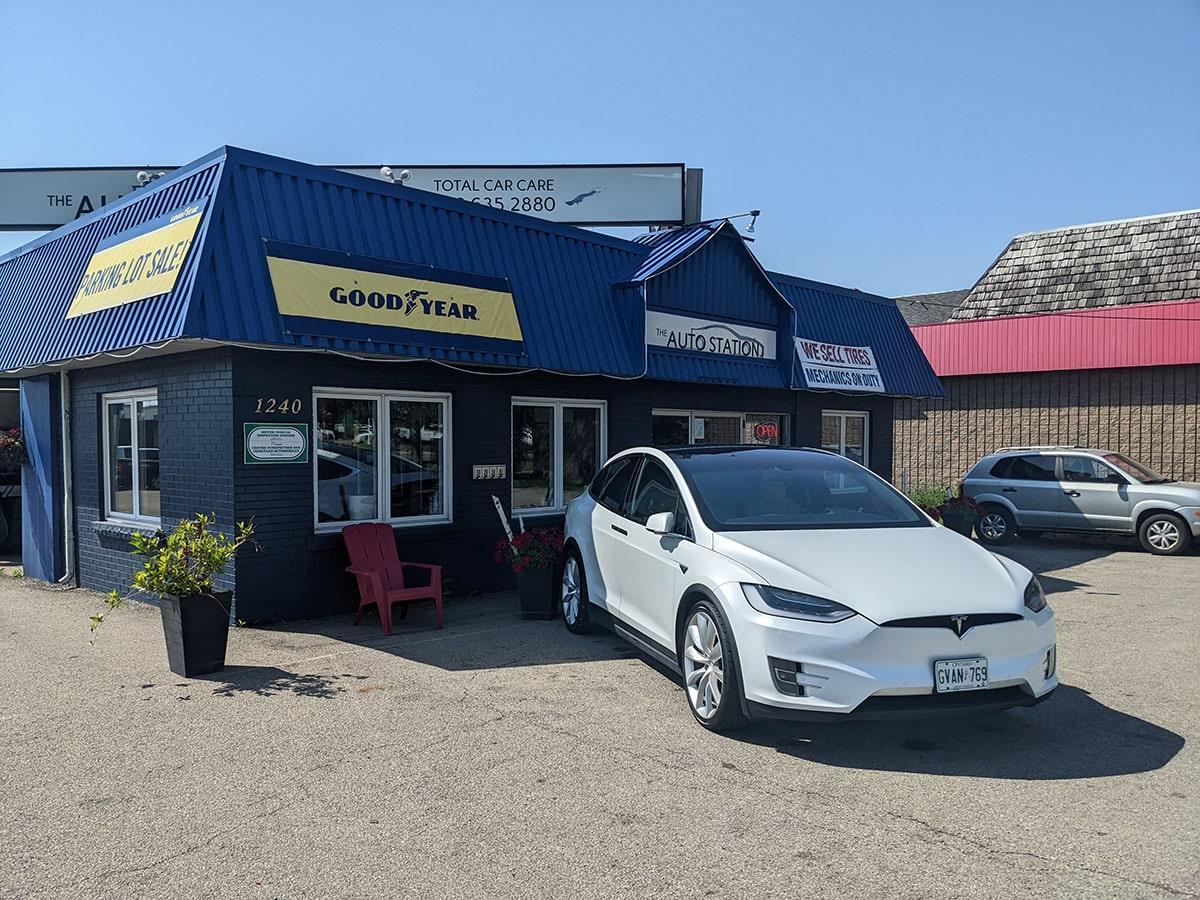
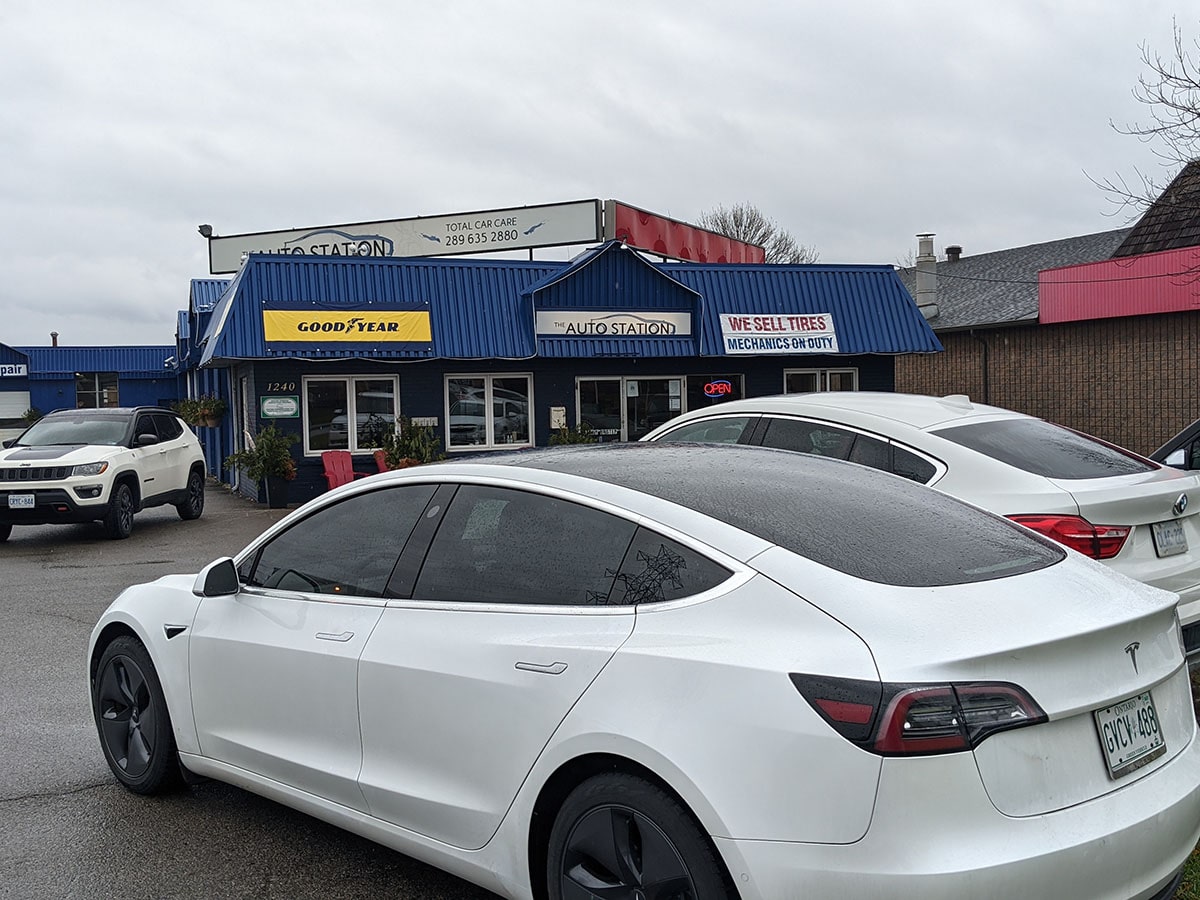
At The Auto Station, we service electric and hybrid vehicles for drivers across Burlington, Oakville, Hamilton, and the wider Golden Horseshoe — from pre-winter battery health checks and salt-belt brake service to tires, alignments, and diagnostics. Whether you've just claimed the federal rebate on a new EV or you're keeping a trusted hybrid on the road, we'll help you spend on the maintenance that actually matters.
